
Poviss Dominus: A Control-Oriented Paddle Shaped by Material and Engineering Choices
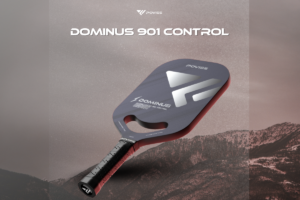
As pickleball equipment continues to mature, paddle development is increasingly guided by player segmentation rather than broad, all-purpose performance claims. The Poviss Dominus is positioned clearly within the control-oriented category, reflecting a design philosophy focused on stability, predictability, and composure during match play.
Rather than emphasizing raw power or aggressive rebound, Dominus is built to support players who rely on placement, timing, and decision-making to win points.
T900 Carbon Face and Player Suitability
At the surface level, Dominus uses a T900 carbon fiber face, a higher-modulus material known for its rigidity and direct ball response. Compared with fiberglass or softer carbon blends, T900 carbon exhibits less flex at impact, resulting in a firmer and more connected feel when the ball meets the paddle.
This material choice tends to favor intermediate and competitive recreational players who already demonstrate consistent swing mechanics. The firmer response provides clearer feedback and allows for more precise shot placement, particularly on drives, counters, and controlled volleys. However, this same stiffness can be less forgiving on off-center contact, making the paddle less suitable for complete beginners who benefit from softer, more flexible faces.
As a result, Dominus is positioned as a step-up paddle rather than an introductory model, aligning with players who are actively refining control and consistency.
Aero Flow Openings and Swing Dynamics
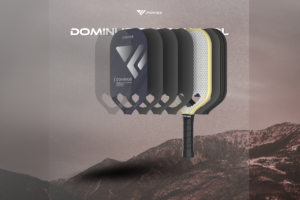
One of the defining visual elements of Dominus is the inclusion of Aero Flow openings on the paddle face. While such cutouts may initially appear cosmetic, their function lies in swing optimization and weight management.
By reducing air resistance during motion, the Aero Flow design allows for slightly faster swing initiation, particularly noticeable during quick exchanges near the non-volley zone. In addition, the openings enable more precise weight redistribution, helping engineers fine-tune balance without increasing total paddle mass.
In match conditions, these effects translate into improved maneuverability and responsiveness rather than dramatic power gains. Players are more likely to notice the benefits during rapid hand battles and defensive reactions, where marginal improvements in swing speed and control can influence point outcomes.
Dominus 901 Control (16 mm) and the Difference from the 14 mm Version
The Dominus 901 Control is built with a 16 mm core, a thickness commonly associated with increased stability and improved touch. A thicker core allows the ball to remain on the paddle face slightly longer at contact, which helps reduce rebound speed and enhances directional control. This characteristic is particularly beneficial during dinks, resets, and defensive blocks, where precision matters more than raw pace.
As a result, the 16 mm version is best suited for intermediate and competitive recreational players who prioritize consistency, placement, and rally control. Players who spend significant time at the non-volley zone or engage in longer exchanges tend to benefit from the calmer, more predictable response of a thicker core.
By comparison, the 14 mm version offers a livelier feel with faster rebound off the face. The thinner core transfers energy more quickly, which can help generate pace on drives and counters with less effort. This makes the 14 mm option more appealing to players who favor a faster, more aggressive style or who already generate sufficient power through swing speed.
In practice, the choice between 16 mm and 14 mm comes down to playing style. The 16 mm Dominus 901 Control emphasizes stability and touch, while the 14 mm version leans toward speed and pop, giving players two distinct performance profiles within the same paddle family.
Balancing Firmness with Control
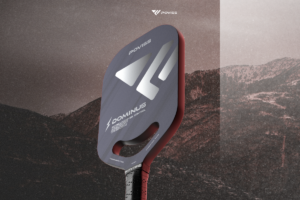
Although a firm carbon face is often associated with power-oriented paddles, Dominus balances this characteristic through a thicker core construction designed to moderate rebound speed and increase dwell time. This combination helps soften overall impact feel while maintaining structural stability.
The result is controlled power that supports blocks, resets, and placement-based shots, encouraging players to generate pace through timing and positioning rather than aggressive swing speed. This balance aligns Dominus with a more tactical style of play, where consistency across extended rallies is prioritized over isolated power shots.
Intended Player Profile
From a performance perspective, Dominus is best suited for players transitioning into more structured and competitive match environments. Intermediate players developing touch and shot discipline, as well as competitive recreational players participating in leagues or regular club play, are likely to benefit most from its predictable response.
Players who find highly flexible paddles inconsistent or overly reactive may appreciate the firmer, more stable feel that Dominus provides, particularly during fast-paced exchanges and defensive situations.
Position Within the Poviss Lineup
Within the broader Poviss lineup, Dominus occupies a defined role as a control-first paddle built on firm materials and functional engineering choices. It is designed to bridge the gap between beginner-friendly, forgiving paddles and high-powered performance models, addressing the needs of serious recreational players who value reliability and composure on court.
Conclusion
The Poviss Dominus combines a T900 carbon face, Aero Flow openings, and a stability-focused core to deliver a paddle centered on control and match consistency. Its design reflects a practical, measured approach to performance, emphasizing real-game usability over headline-driven specifications.
For players seeking predictable response, confident handling, and a more controlled playing experience, Dominus represents a clearly positioned option within the modern pickleball paddle landscape.